
What the Chesterfield County Owner Record Shows
Real Estate Assessment Data, known as READ, is where the owner of record appears. Search it by address or tax ID. Chesterfield County describes each parcel result as a record of ownership, property address, legal description, assessed value and improvements. One limitation stands out. The public search does not support an owner-name lookup. So start from the parcel, not the person. If the owner field looks stale, call Real Estate Assessments. The office sits at 6801 Mimms Loop, PO Box 40, and answers at 804-748-1321 on weekdays from 8:30 a.m. to 5 p.m. Have the full tax ID and legal description ready. Staff can explain which assessment roll entry is current for a parcel. Value disputes follow the county's appeal process. Recorded-transfer questions belong to the Circuit Court Clerk. The county's Real Estate Assessment Data search is the official entry point, and that page displays the Chesterfield County property search form.
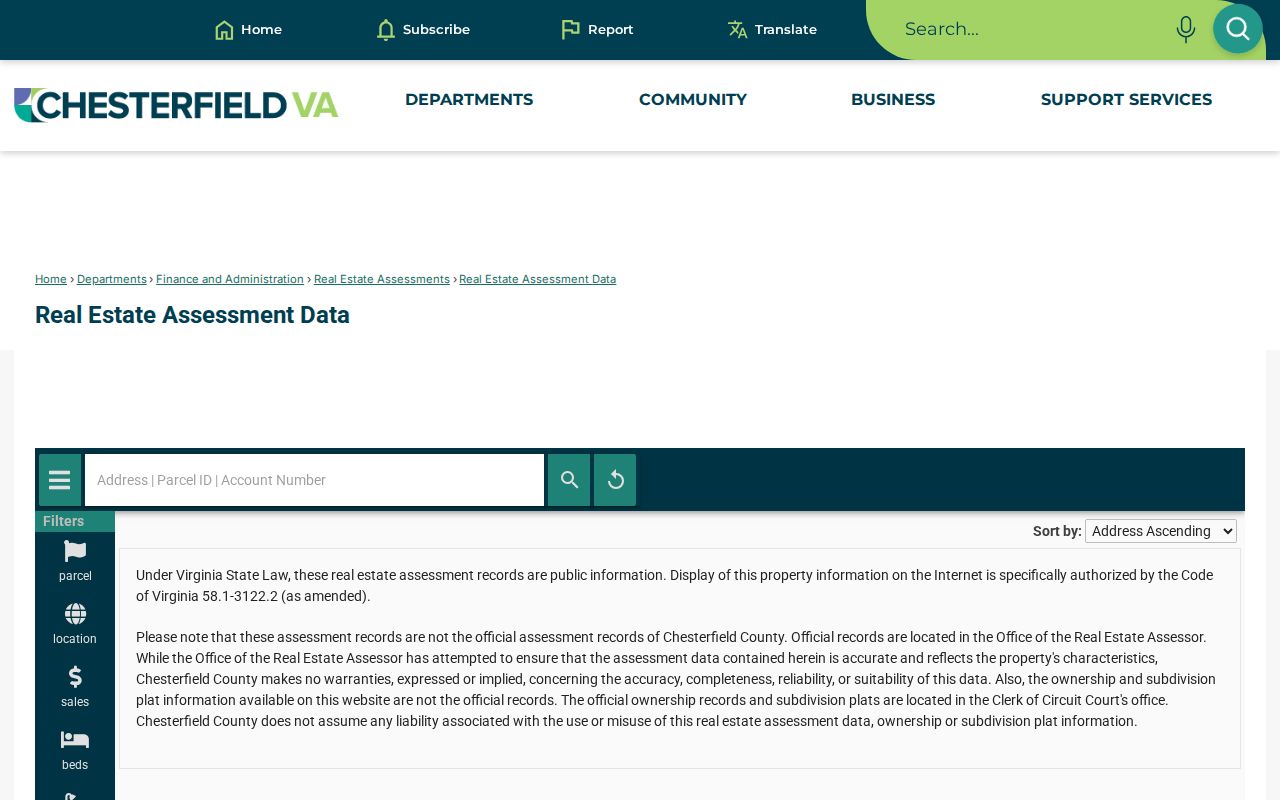
Search by a known address or tax ID first. Then compare the returned name and legal description against the recorded deed for that Chesterfield County parcel.
| Owner name | Returned after an address or tax-ID search in READ. |
|---|---|
| Vesting | Confirm the ownership form from the deed; the sample card did not expose it. |
| Mailing address | Not verified as a visible READ field in the text inspection. |
| Situs address | Physical property address described by the assessment system. |
| Legal description | Included in the county's description of the property record. |
| Value and improvements | Assessed value and improvement information are county-described fields. |
The owner of record is not always the occupant. Someone may inherit or invest from out of state. A mailing address can differ from the situs address. The county does not confirm the exact mailing field on every parcel card, so treat that detail with care. The assessment result is a tax record, not proof of residency or a way to reach someone in person.
Chesterfield County Annual Owner Roll
Chesterfield County reassesses real estate every year. January 1 sets the valuation date. Assessment notices go out by February 1. That schedule gives the tax roll a firm anchor each year. It is not a day-to-day transaction log. In READ, a current owner of record is simple. It is whatever name the assessor's system holds when you view a result.
Deeds, plats, and wills arrive at the Clerk's office. They are processed daily, according to the county. No standard turnaround is published. There is no set time for how quickly a recorded deed changes the owner name in READ. So a recent sale can leave a timing gap between the instrument and the roll.
Chesterfield County Roll Update Timing
Chesterfield posts no numeric closing-to-roll lag. Never count days after a recording. The same caution applies to tax mailings. When ownership turns on a recent transaction, check the newest record date in the deed index. A recorded deed in the Circuit Court Clerk's office is the more direct proof of transfer. The assessor still keeps the tax roll, and the annual value process serves a different purpose. Read both dates and keep the roles separate.
Confirming a Chesterfield County Current Owner
Comparing two sources settles most ownership questions. Match the READ owner name against the most recent recorded conveyance. Chesterfield's deed index is organized by party name, not by address. The assessment result supplies the search name. The 15-digit tax ID helps confirm the land. Search the Clerk's index with the owner listed as grantee. Then inspect the latest instrument and its legal description.
- Search READ by address or tax ID and save the owner name and legal description.
- Search the Clerk's index under the owner name as grantee.
- Compare the latest recorded deed's parties, tax ID and land description with the assessment result.
- If the owner is a business, check the entity filing separately.
- Owner of record
- The name displayed in the assessor's current roll result.
- Vesting
- The form in which a deed names a grantee or group of grantees.
- Registered agent
- A contact listed for an entity in a business filing, not necessarily the parcel owner.
Chesterfield County Entity Ownership
Chesterfield County deeds can vest a parcel in an LLC, corporation, trust or estate. The owner of record may be an entity. The Virginia SCC Clerk's Information System searches business entities. It also offers separate debtor-name and file-number searches for UCC filings and federal tax liens. Use the SCC Clerk's Information System to confirm an entity named in a deed. A registered agent is only a filing contact. That role never makes the agent the real-estate owner.
Entity data adds context to a name on a deed. The recorded instrument remains the source for a Chesterfield County parcel's grantee.
Chesterfield County's Newest Recorded Deed
Deeds recorded from 1967 forward are searchable online through the Clerk. The permanent land records reach back to 1749. The online index works by name. That limit matters. A recently recorded deed can answer a transfer question faster than the tax roll. But the instrument itself still needs inspection.
Virginia sets firm requirements for the first page of any instrument affecting real estate. It must show a 15-digit tax ID. It must also state the consideration paid, or the disclosure exception that applies. The Clerk will not knowingly record a document containing a Social Security number. These details help tie a new deed to the assessor's parcel. Yet the annual owner roll does not update the same day a deed is recorded. When the question is a recent closing, compare the recorded date and the legal description directly. Do not wait for the next value notice.
The Clerk will not run a title search or offer legal advice. The Chesterfield County deed-records page explains the copy process. It also covers the documents the Record Room holds.
Visit the Record Room at 9500 Courthouse Road between 8 a.m. and 4 p.m. Land-record recording stops at 3:30 p.m. Copies run $0.50 per page, and certification adds $2 per document. A phone request adds $2 processing plus postage. Include the parties, the instrument type, and an approximate date when ordering. To match the newest deed against the roll, use the tax ID and legal description. A familiar name alone does not prove the instrument involves the parcel in question.
Chesterfield County Owner Record Alerts
Property Notification sends a free email. A trigger fires when a registered name or parcel number appears on covered recorded documents. It works as a monitoring aid for owners tracking filings. The Clerk cautions that the service cannot verify who signed a document. That caution applies even to one that meets recordation standards. Register through the Virginia Property Notification service. Then check any notice against the recorded instrument itself.
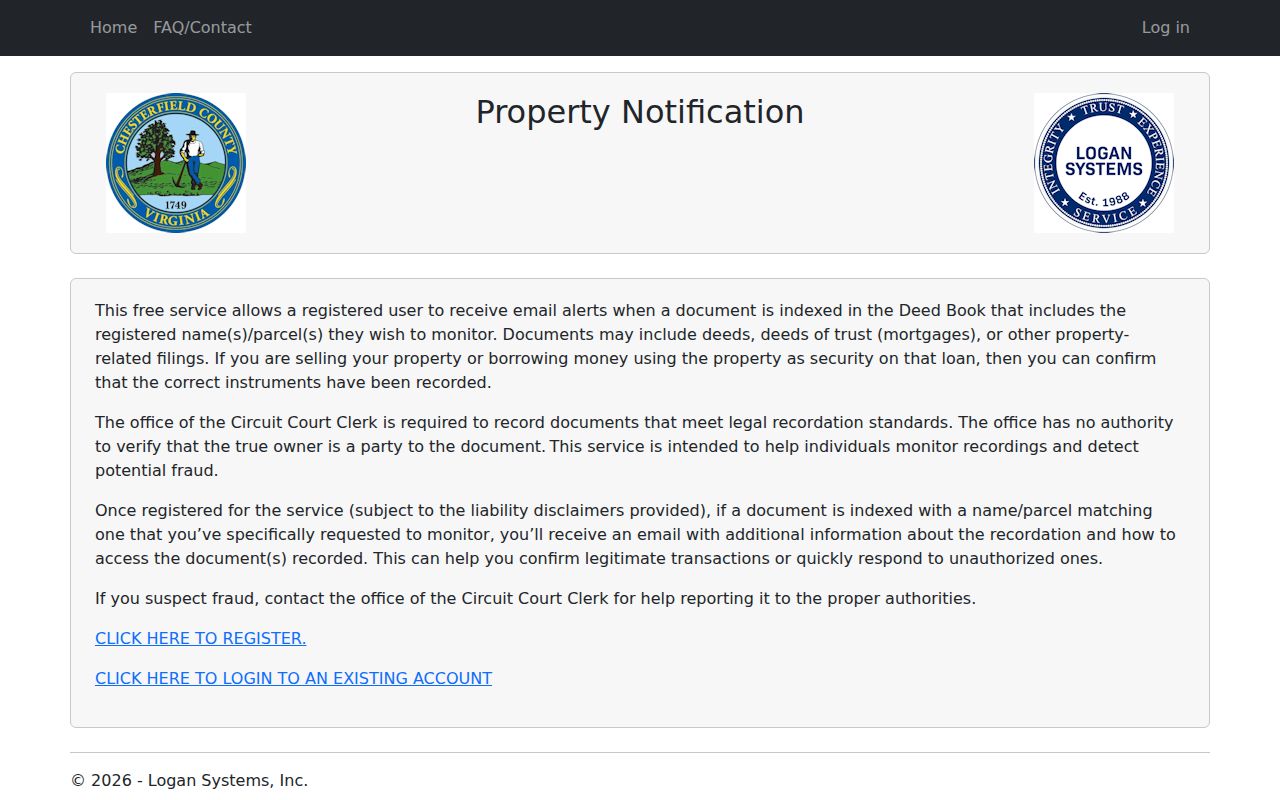
An email is only a prompt to check the public file. The county has not decided who the real owner is.
Reaching a Chesterfield County Property Owner
Contact through the mailing route the responsible record custodian provides. Not every READ result displays a mailing address. A postal place label does not show where a person actually lives. Virginia's Address Confidentiality Program gives eligible participants a substitute address with mail forwarding, though no county source guarantees blanket suppression of a recorded deed.
Lawful use. Use Chesterfield County owner information for legitimate property matters. Do not use a name or address to follow, threaten or harass a person.