
How a Chesterfield County Property Search Works
Chesterfield's everyday lookup follows a short trail. An address leads to an assessment result, which yields the tax ID and owner name. From there, the name goes into the deed index. READ accepts either a street address or the county's tax ID. A 2025 county assessment report notes that the owner name appears in the result, though the public application allows no direct owner-name search. For subdivision context, the Parcel Viewer adds map layers. Tax billing runs through the Treasurer's portal as a separate account, so use that page for invoices and balances.
A name alone invites confusion. Start from a known address or parcel whenever possible. That keeps an LLC, trust, estate or person separate from another party sharing the name, and it saves time in the deed index later. Record the full legal description and tax ID before leaving READ.
- Enter the situs address or 15-digit tax ID in READ and open the matching parcel result.
- Copy the tax ID, owner name and legal description exactly as shown.
- Use the party name in the Clerk's deed index, checking both grantor and grantee roles.
- Compare the parcel in GIS and the Treasurer account by tax ID or address.
- Ask the custodian for a copy when the recorded instrument or bill itself matters.
Chesterfield County READ Address Search
Real Estate Assessment Data, or READ, is the county's address-to-parcel doorway. The official search page supports two keys: a property address and the county's 15-digit tax ID. Either search displays the owner in the result. No owner-name box appears there. An address is often the only clue on hand. The county READ page describes the public assessment search and its entry point. Treat the result with care. The parcel record is an assessment view, not a deed or a title opinion.
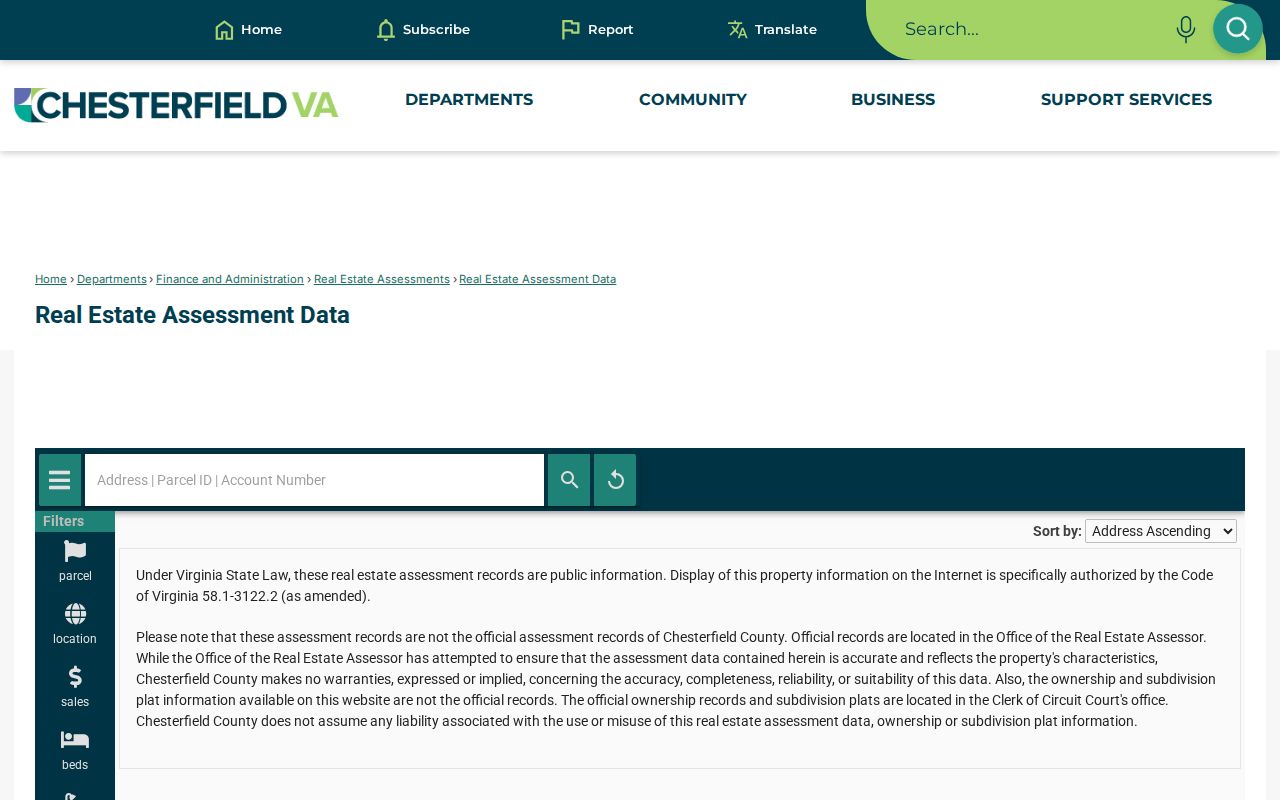
Copy the owner name and full tax ID. Keep them together, so the deed index and the map still refer to the same Chesterfield County tract.
| READ field | Documented behavior | Use in the next step |
|---|---|---|
| Property address | Address search is supported; exact controls are not published. | Find the situs parcel. |
| Tax ID | County standard is 15 digits. | Carry the exact key to the map and deed. |
| Owner name | Returned in a result; direct owner-name search is not allowed online. | Use as a party name in the deed index. |
| Legal description and value | Official assessment pages describe these result fields. | Compare parcel identity and assessment year. |
Chesterfield County's 15-Digit Parcel Key
The tax ID is the most exact cross-reference you can use in a Chesterfield County property search. Addresses come in many shapes. A READ address may carry punctuation or formatting that differs from a map label, and the parcel number keeps those views tied to one assessment parcel. Chesterfield County also requires the 15-digit identifier on the first page of any deed or instrument affecting an interest in real property, under Va. Code §17.1-252.
When you copy the number, take all fifteen digits. Avoid adding spaces or dropping leading digits. The county publishes no official digit-by-digit explanation of the key. Treat it as a full identifier rather than a code that reveals a subdivision, map book, or lot on its own. If a deed and the current assessment show different legal descriptions, pull the recorded instrument and any later plat. Compare them before deciding they describe the same land.
- Tax ID
- The county's full 15-digit assessment key.
- Situs
- The physical location used to find a parcel by street address.
- Legal description
- The written description of land conveyed or assessed.
What a Chesterfield County Property Record Shows
A READ parcel result is the first record to copy. It anchors any effort to identify a parcel in Chesterfield County. The assessment pages say it can show ownership information, the property address, the legal description, assessed value and improvements. Those five details travel well between offices. Anything beyond them depends on the live application.
| Owner of record | Owner name is returned after an address or tax-ID search. |
|---|---|
| Situs address | Physical property address documented by the assessment system. |
| Mailing address | May differ from situs; the visible card field was not verified. |
| Tax ID | County standard is a 15-digit parcel key. |
| Value and improvements | Assessed value and improvement information are described by the county. |
| Legal description | Official assessment pages say the property record includes one. |
The published card has limits. It shows no land-and-improvement split, exemptions, sketch, sale date, sale price or value history. Verify extras in the live application first. The record also proves no clear title, and no mapped parcel line counts as a survey.
Chesterfield County Owner Name Search Limits
READ is not a direct name-search portal. The county's 2025 assessment report explains why. A user may see the owner name after searching by address or tax ID, but online owner-name searching is not allowed for safety reasons. That policy sets the route. Locate the parcel first, then carry its owner name to the name-organized deed index when a transfer needs review.
Ownership can also hide behind an LLC, trust, estate or life estate. A trust name may differ from a mailing name. A common personal name can return several deed entries. Match the exact legal party and description instead of trusting a name-only hit.
Chesterfield County Parcel Viewer Cross-Check
The county Parcel Viewer sets a parcel in context. Subdivision, school and political-district boundaries appear around it. The GIS hub adds hydrography, land-use plan, case information and historic-landmark views. The tax ID or address bridges READ and the viewer. Confirm the mapped parcel matches the assessment record. GIS is a location aid only. It cannot establish a legal boundary, and the county directs boundary questions to a licensed surveyor. For a lot-and-block description, the official plat sits in the Clerk's land records. An assessor's subdivision copy is informational.
The GIS hub lists open datasets for parcels, addresses, streets and subdivisions. The map adds context, while the deed and the recorded plat remain the written sources to review.
Chesterfield County Name-Based Deed Index
The Circuit Court Clerk keeps the county's land-record index organized by party name. Street addresses and legal descriptions are not the way in. The public deed index reaches back to 1967. Permanent land and court records run to 1749. Start with the current owner's name in both the grantor and grantee roles. Then follow the other party on each deed to trace the transfer history backward.
Deeds, deeds of trust, liens, plats, judgments and wills all sit among the Clerk's instruments. The portal's dropdown labels and image handling vary, so expect some trial and error. A free index hit is only a lead. The recorded image, or the Record Room copy, is the document worth inspecting. The deed-records page walks through that workflow in detail.
Before treating a name match as an ownership transfer, read the instrument type. A deed conveys an interest. A deed of trust secures a loan. A judgment or lien records a claim. The named party could be a grantor, grantee, lender or debtor. Match the recording date against the assessment parcel. Match the full legal description and the complete 15-digit tax ID too. If the description cites a lot and block, open the Clerk's recorded plat itself. The current map image works only as a visual cross-check.
Chesterfield County Permits and Cases
A property search here does not fold building activity into land ownership. The county runs a separate portal called Enterprise Land Management, or ELM. Permit data, inspection requests, plan-review status and comments all live there. Approved documents, receipts and Certificates of Occupancy live there too. Planning cases surface instead in the county's GIS Case Information tools. The county's public ELM description names those functions. It offers no field list or coverage start date.
Turn to the ELM information page for questions about an addition, inspection or certificate. The Clerk does not hold blueprints. Building Inspection or the builder is the county's stated route for plan questions.
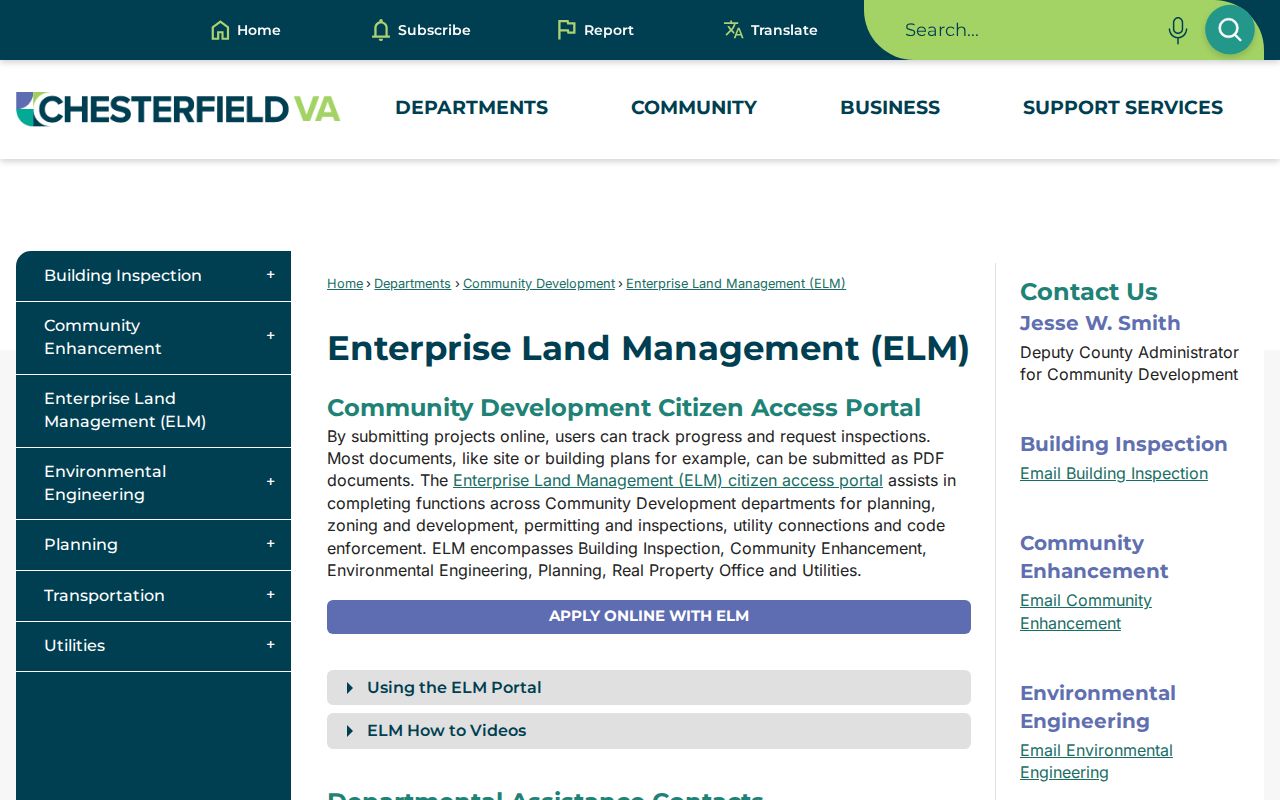
ELM adds development history beside the parcel record; it never replaces the owner field or the deed index.
Chesterfield County Tax Account Search
Tax bills, payments, and delinquency all run through the Treasurer's Citizen Portal. It supports combined accounts. It also displays invoices covering the most recent six years. First-half real-estate tax comes due June 5. The second half comes due on December 5. In 2026 that second-half deadline moves to December 7 because December 5 falls on Saturday. A missing bill does not erase the charge. The Treasurer notes the office can send a copy by phone at 804-748-1201.
Once the parcel is known, open the account in the Citizen Portal. Never mistake an assessment result for a tax balance. The assessor values the land; the Treasurer tracks invoices, payments, and delinquency.
Search by Address, Owner, or Parcel
Each key unlocks a different part of a Chesterfield County property search. An address is easiest for a first pass. The 15-digit tax ID is the precise cross-system key. A party name is the way into the Clerk's deed index. The person's name may be common. The holding may sit inside an entity. In either case, start with the address or parcel instead.
| Search Key | Best For | Where It Works | Watch Out |
|---|---|---|---|
| Address | Find one situs parcel when the street location is known. | READ and Parcel Viewer | Place names and postal ZIPs do not set legal boundaries. |
| Owner name | Trace parties in an existing deed entry. | Circuit Clerk deed index | READ does not allow direct online owner-name search. |
| Tax ID | Match the same assessed parcel across systems. | READ, GIS and deed instruments | Keep the entire 15-digit string intact. |
A result that raises a title question sends you to different stops. The right stop depends on the evidence needed. The Circuit Court Clerk's index searches deed parties by name. Staff will not run a title search or give legal advice. Copies run $0.50 per page. Certification adds $2 per document. A phone copy request carries an extra $2 processing charge plus postage. Keep the instrument date, parties and parcel description together when requesting a record. An address alone is not the Clerk's index key.
Not a title search. A Chesterfield County property search shows an assessment or index record; it does not guarantee clear title or a complete chain. A title company or attorney can perform that work.